
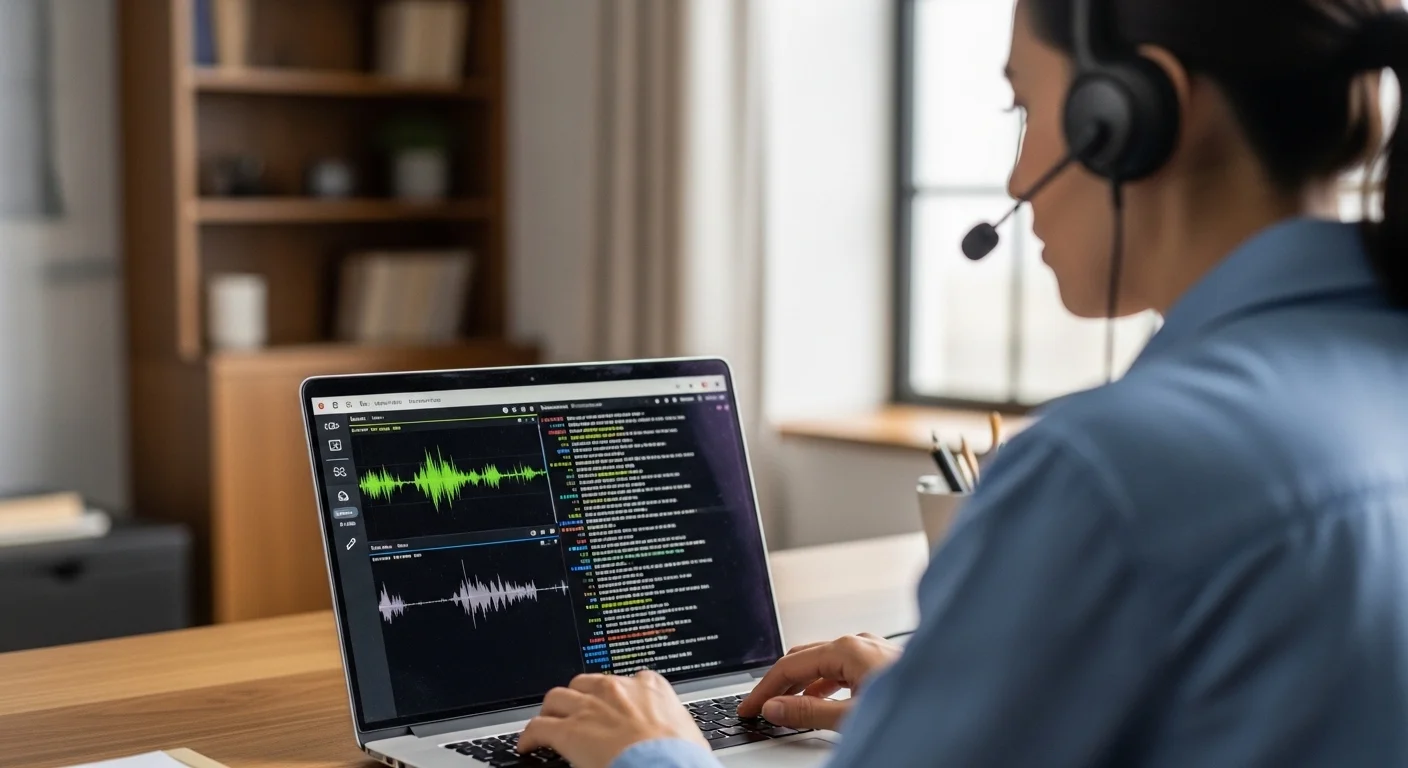
A captioner is a trained professional who converts spoken audio into written text in real time or after recording. Captioners create accurate, time-synced captions for television, live events, online videos, webinars, social media, and streaming platforms to ensure accessibility for people who are deaf or hard of hearing and to improve viewer engagement.
They may work live (real-time captioning) or produce edited captions for recorded content.
Now let’s slow down and talk about it properly because if you’ve ever wondered what is a captioner, the answer goes way deeper than “someone who types what people say.”
Captioners are storytellers.
They’re accessibility heroes.
They’re quiet internet architects shaping how we consume content every single day.
And yes, they’re kind of magical. ✨
What Does a Captioner Actually Do Every Day?
If you picture someone casually typing while watching Netflix — no, babe. It’s way more intense than that.
A captioner’s daily work might include:
• Listening to multiple speakers
• Identifying who is speaking
• Adding punctuation in real time
• Describing sound effects like [applause] or [music playing]
• Syncing captions perfectly to speech
• Adjusting for accents or fast talkers
• Researching terminology for accuracy
Live captioners often use specialized stenography machines, voice recognition software, and captioning platforms.
It’s not just typing. It’s linguistic precision under pressure.
Why Captioners Matter More Than Ever
Here’s the thing: accessibility isn’t optional anymore. It’s essential.
Captioners:
• Support over 430 million people worldwide with hearing loss
• Improve comprehension for non-native speakers
• Boost video engagement by up to 80% (based on platform behavior trends)
• Help viewers watching silently on social media
• Increase search discoverability through text indexing
If you’re a content creator, understanding what is a captioner also helps you understand why captions improve reach.
Social media platforms favor content that keeps users watching longer. Captions increase retention. Retention increases distribution. Distribution increases growth.
See the ripple effect? 🌊
Skills Required to Become a Captioner
Being a captioner isn’t just about typing fast.
You need:
• 200+ words per minute typing speed (especially for live captioning)
• Exceptional grammar and punctuation skills
• Strong listening comprehension
• Quick thinking under pressure
• Cultural awareness
• Technical software knowledge
Live broadcast captioners often train for years, especially those using stenography systems.
How to Become a Captioner
If you’re thinking, “Okay but how do I become one?” — here’s your roadmap:
-
Decide between live or offline captioning
-
Enroll in a captioning or court reporting program (for stenography)
-
Practice speed and accuracy daily
-
Learn captioning software (like Eclipse or CaptionMaker)
-
Apply to captioning companies or freelance platforms
-
Build experience through internships or practice recordings
Many captioners work remotely. Yes — remote work, headphones on, coffee nearby, typing like a queen. ☕💻
What Is a Captioner vs. What Is a Transcriptionist?
They sound similar. They’re not identical.
Captioner:
• Adds time synchronization
• Includes speaker identification
• Describes background sounds
• Works in live environments
Transcriptionist:
• Converts speech to text
• Usually works with recordings
• May not time-sync content
Captioning is more technical because it involves timing and formatting for display on screen.
Real-Time Captioning: The Adrenaline Side of the Job
Live captioning is intense.
Imagine captioning:
• A live news broadcast
• A presidential speech
• A wedding livestream
• A sports event
• A university lecture
There’s no rewind button.
You listen, process, type — all in seconds.
It’s fast. It’s focused. It’s powerful.
Offline Captioning: The Precision Art Form
Post-production captioners work differently.
They:
• Edit for clarity
• Adjust timing
• Correct grammar
• Break lines for readability
• Ensure captions match tone
This role is more controlled but equally detailed.
Salary and Career Outlook for Captioners
Captioner salaries vary based on specialization and location.
Live broadcast captioners often earn higher due to technical expertise. Freelancers may charge per minute of video.
With online video exploding across YouTube, TikTok, Instagram, Netflix, and streaming platforms — captioning demand continues to grow.
Accessibility laws are expanding globally. That means stable career potential.
What Is a Captioner in the Social Media Era?
Social media changed everything.
Now, captions aren’t just accessibility tools — they’re engagement tools.
Viewers scroll with sound off. Captions:
• Hook attention
• Improve retention
• Increase completion rates
• Help viewers understand quickly
Brands now invest in captioners for Instagram Reels, TikToks, and YouTube Shorts.
Because attention spans are short — but text keeps people grounded.
Emotional Psychology: Why Captions Create Connection
Here’s something most people miss.
Captions do more than inform. They emotionally anchor viewers.
When someone reads text while hearing speech, comprehension increases.
Text:
• Reinforces emotional tone
• Clarifies meaning
• Reduces confusion
• Builds trust
For creators sharing love stories, wedding moments, relationship milestones — captions amplify intimacy.
Text + voice = deeper emotional impact. 💞
Caption Writing Framework for Social Media Creators
Even if you’re not a professional captioner, you can apply captioning psychology to your Instagram captions.
Here’s a simple framework:
1. Hook – First 1–2 lines grab attention
2. Emotion – Share feeling or vulnerability
3. Value – Add insight or relatability
4. CTA – Invite engagement
Example:
“Forever isn’t long enough with you ❤️
Some days I still can’t believe we found each other.
Marriage isn’t perfect — it’s partnership.
Tag your partner.”
Simple. Emotional. Engaging.
Common Mistakes People Make About Captioning
• Thinking auto-captions are always accurate
• Ignoring punctuation
• Forgetting speaker labels
• Overcrowding lines
• Not syncing text properly
• Using captions that move too fast to read
Professional captioners correct these issues.
SEO Benefits of Captioning for Content Creators
Search engines cannot “watch” video. They read text.
Captions:
• Increase keyword indexing
• Improve discoverability
• Help videos appear in search results
• Boost accessibility ranking signals
If you’re building a brand, captions are not optional.
They are strategic assets.
Captioning for Weddings, Engagements & Romantic Content
If you create love-focused content, captions amplify the moment.
Imagine a wedding video without text during vows.
Now imagine captions highlighting:
“I choose you.”
“Today and every day.”
“Forever starts now.”
See the difference?
Captions preserve emotion.
Frequently Asked Questions (FAQ)
1. What is a captioner in simple terms?
A captioner is someone who turns spoken audio into written text displayed on screen, either live or for recorded videos.
2. Do captioners need special training?
Yes. Many live captioners complete stenography training. Offline captioners need strong grammar and timing skills.
3. Is captioning a good career?
Yes. With growing demand for accessibility and video content, captioning offers strong remote opportunities.
4. What tools do captioners use?
Stenography machines, voice recognition software, caption editing platforms, and timing tools.
5. How fast do captioners type?
Live captioners often exceed 200 words per minute.
6. Are automatic captions enough?
Auto-captions help but often require editing for accuracy and clarity.
7. Can I become a captioner from home?
Yes. Many captioners work remotely.
8. Why are captions important for Instagram and TikTok?
Because many users watch videos without sound. Captions improve engagement and watch time.
Hashtags for Captioning & Accessibility Content
#Captioner
#ClosedCaptioning
#AccessibilityMatters
#LiveCaptioning
#VideoAccessibility
#InclusiveContent
#SocialMediaTips
#ContentCreation
#DigitalAccessibility
#RemoteCareers
Final Thoughts: What Is a Captioner, Really?
So — what is a captioner?
A captioner is a bridge.
Between sound and silence.
Between creators and audiences.
Between access and exclusion.
They make digital spaces more inclusive.
They make content easier to understand.
They increase engagement.
They support connection.
And in a world where content moves fast and attention moves faster, captioners quietly hold everything together.
If you’re a creator — start valuing captions.
If you’re curious about the career — explore it.
If you’re watching videos silently right now — thank a captioner.
Because without them, millions of voices would go unheard.
Save this guide for later.
Share it with someone who loves accessibility.
And next time someone asks, what is a captioner? — you’ll have the perfect answer. 💛
Meta Title:
Meta Description:

“Explore stylish captions, heartfelt quotes, and trending social media ideas by Madison Blake on CaptionLuxx. Perfect for Instagram, love posts, and daily inspiration.”